





A.B.T. and J.F. Frantz Gun Game Models:
Here is a list of the different models that were manufactured by A.B.T. and Frantz Manufacturing.
If you see a model that you would like to own, let me know as I have some machines available.
Photos of restored games will be sent for approval before purchase.
Shipping is available or free delivery to the next Chicago Coin-op Show.
|
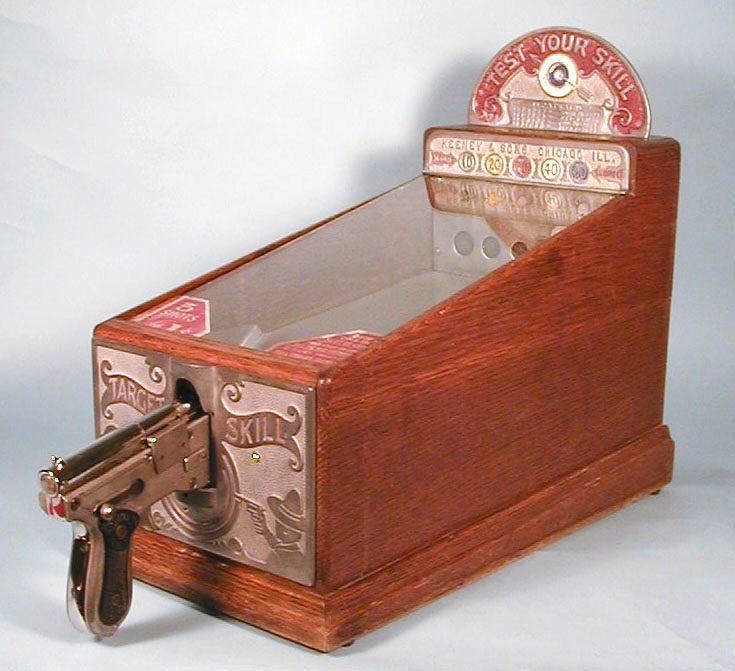
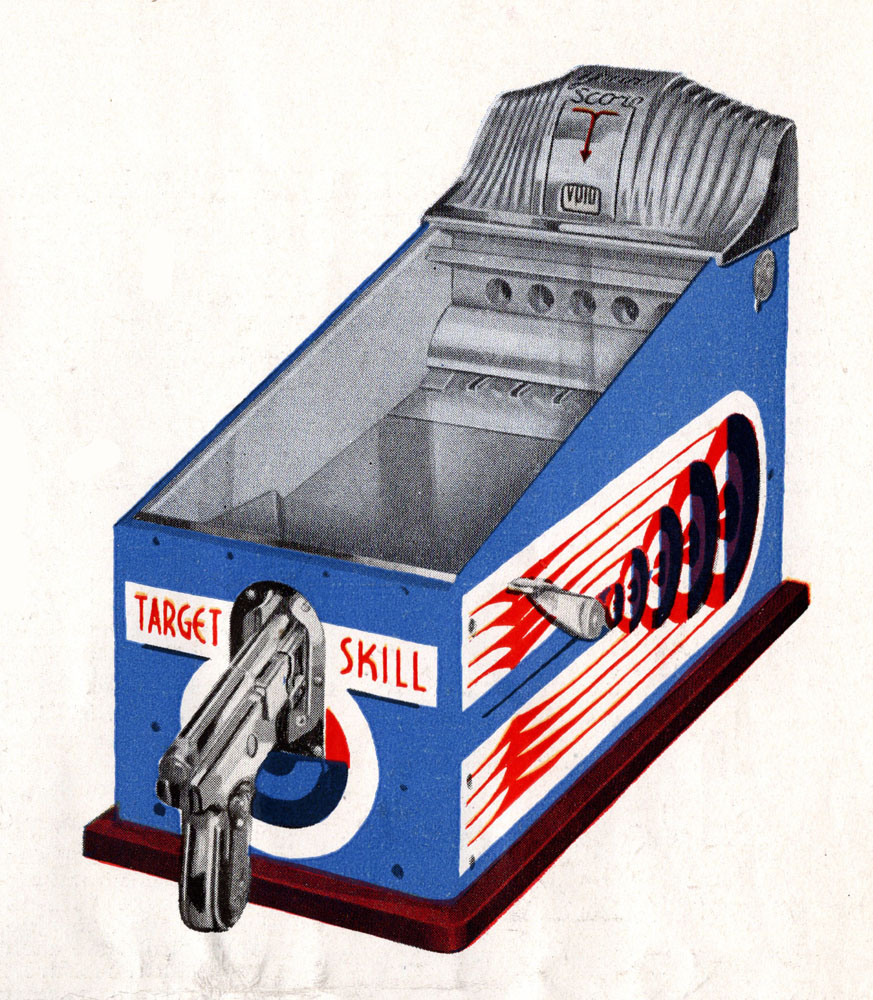
Model A This is the one that started it all, way back in 1925. The Model A had 5 targets that got smaller from left to right. Hitting a target dropped a flag with a colored dot on it. Scores were manually added up by the shooter. With only five shots for a penny, a perfect score was possible but very difficult. A fully restored Model A, or Target Skill as it is also known, sells for around $1,500 to 1,800. Click on the photo to enlarge it. |
|
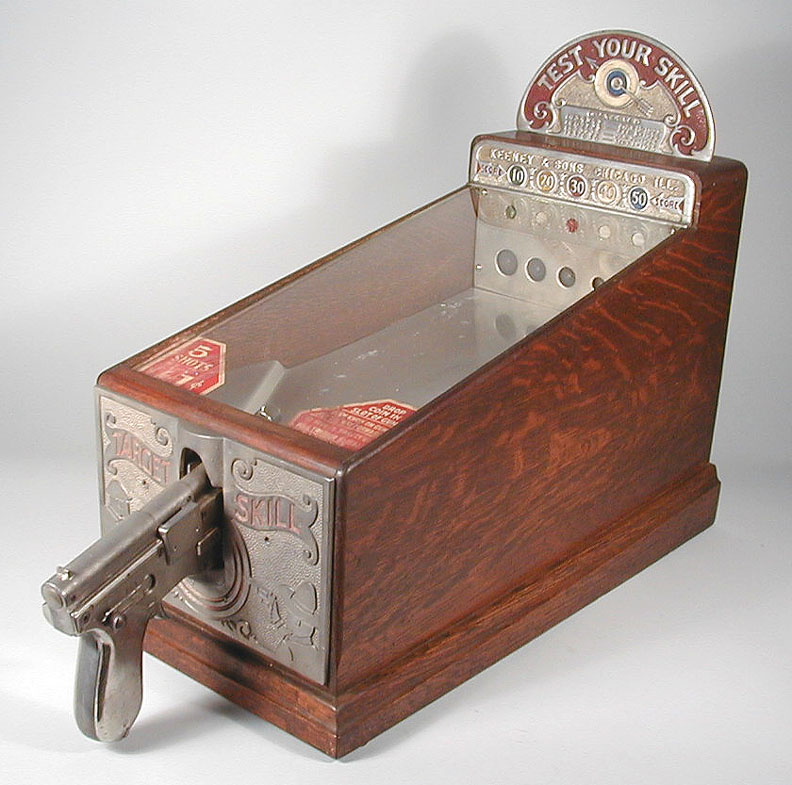
Keeney Model A A.B.T. private labeled machines for certain other manufacturers during this time. Here is a Model A made for Keeney. It had their name on the small marquee and they also put their own stamp on it by adding small touches like colored paint on screws to aid in disassembling and a play counter. A surprising number of this model have survived. A fully restored Keeney Model A sells for around $1,500 to 1,800 and perhaps more to a collector of Keeney machines. Click on the photo to enlarge it and also see other views of the game. |
|
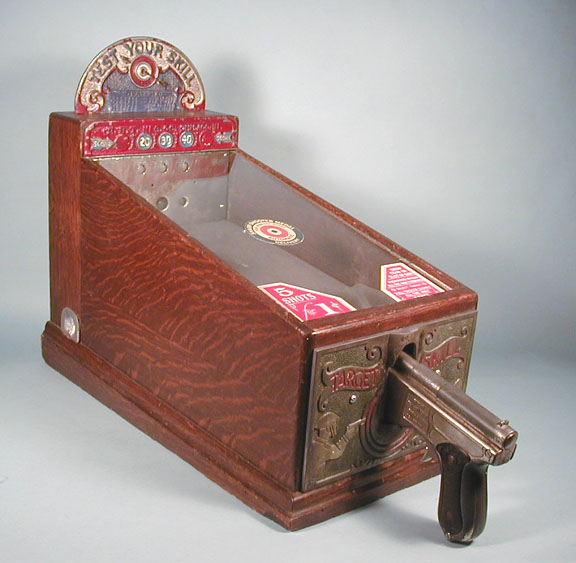
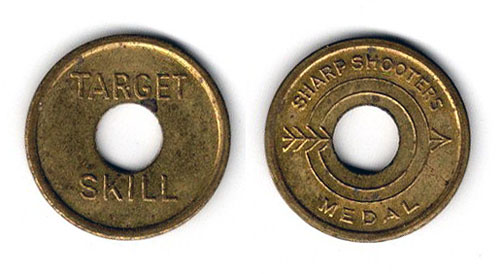
Model B The Model B came out in 1926 and was a payout version of the Model A. Versions with 3 targets and 1 target were also made. A perfect score gave you a souvenir Sharpshooter Medal that came out of the slot in the rear left side. To see a sample of this award token, click here. This game is rarely seen. My best guess on a value would be around $4,000 to 4,500. Click on the photo to enlarge it. |
|
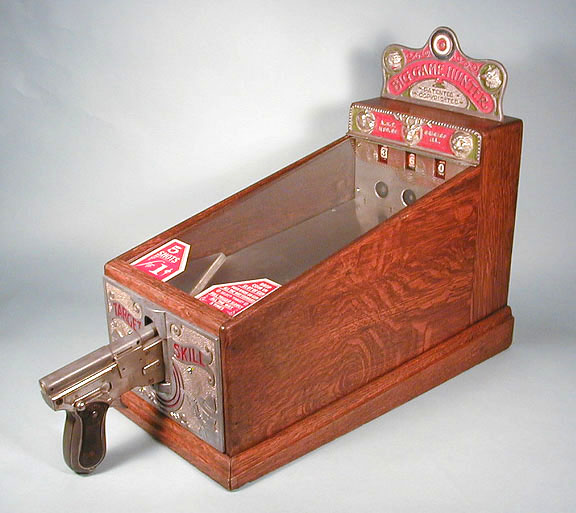
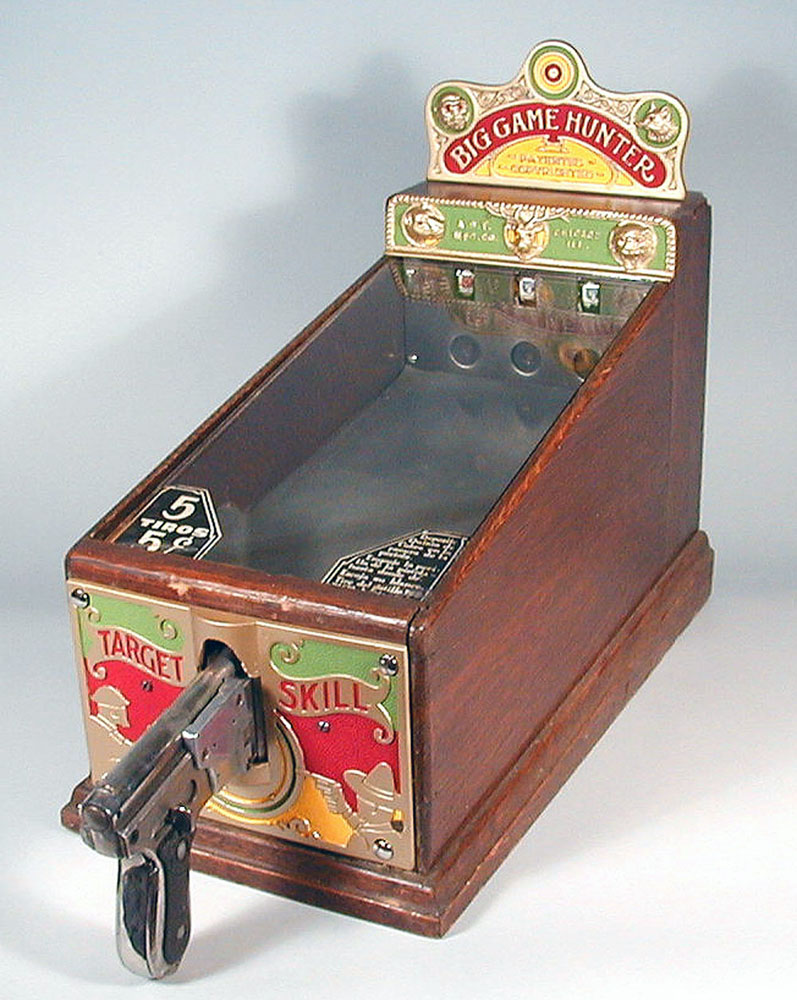
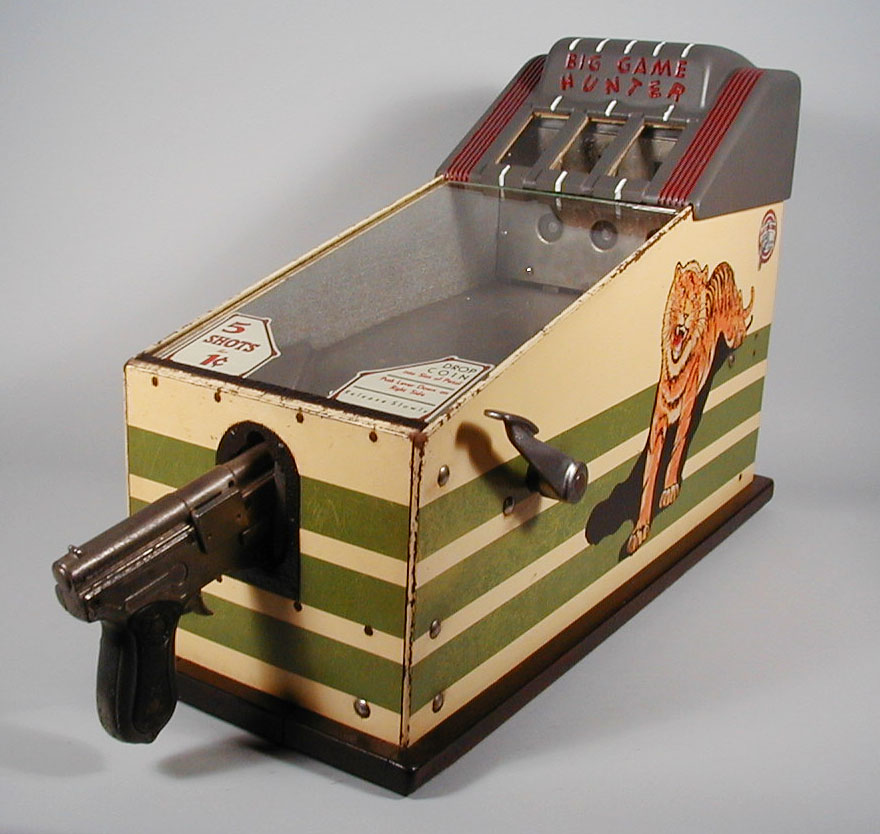
Big Game Hunter (Model C) The next popular model was officially dubbed the Model C, but it usually known by its other name, the Big Game Hunter. This model was also available as a kit for folks that wanted to convert a Model A to a newer and more exciting game. Hitting the target causes the reel above it to spin, like a slot machine, and the ending combination of big game animals could possibly give the shooter an award based on the award card that was included with the game. To see a photo of one of the award cards, click here. This game was also available with cigarette packs or numbers on the reels. Matching up 3 of a brand would win the shooter a pack of cigarettes and a combination of red, white and blue reels also was a winner. To see a photo of the different reels made, click here. A fully restored Big Game Hunter should sell for around $1,500 to 1,800. Click on the photo to enlarge it and also see other views of the game. |


|
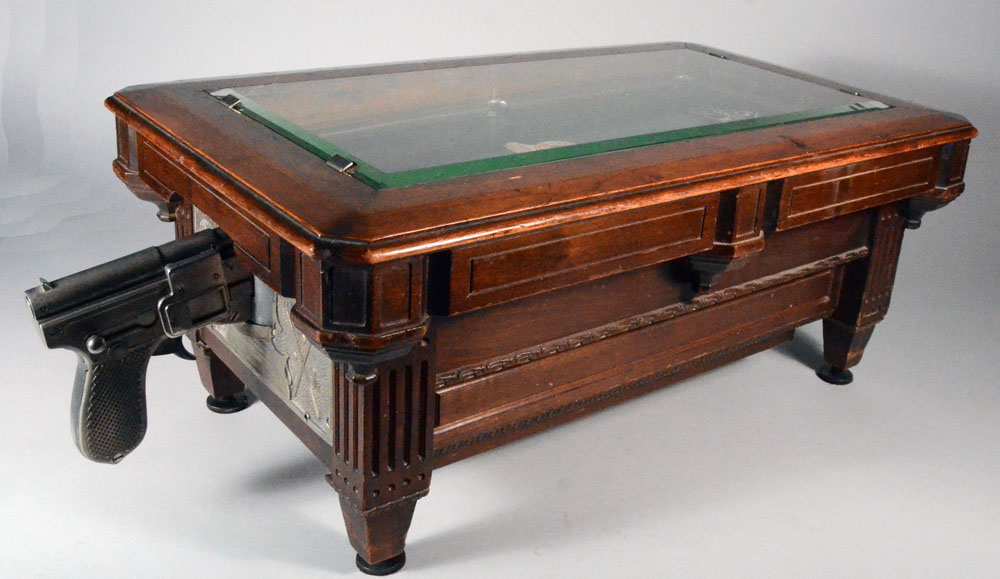
Billiard Practice In 1928, A.B.T. produced the model called Billiard Practice. This game is very elaborate with a solid walnut cabinet, shaped like a miniature pool table. They made it in two sizes, the small table (15" by 25") and the large table (18" by 30"). That doesn't seem like much of a difference but side by side it is quite striking. Five shots for your coin, try to get the ball into the corner or side pockets. This is the first game that they made that automatically added up the score. The gun mounting mechanism is different on this model from all the other games that they made so it is important that you find a complete game as those unique parts are nearly impossible to find. A fully restored Big Game Hunter should sell for around $4,000 to 5,000, either size. Click on the photo to enlarge it and also see other views of the game. |
|
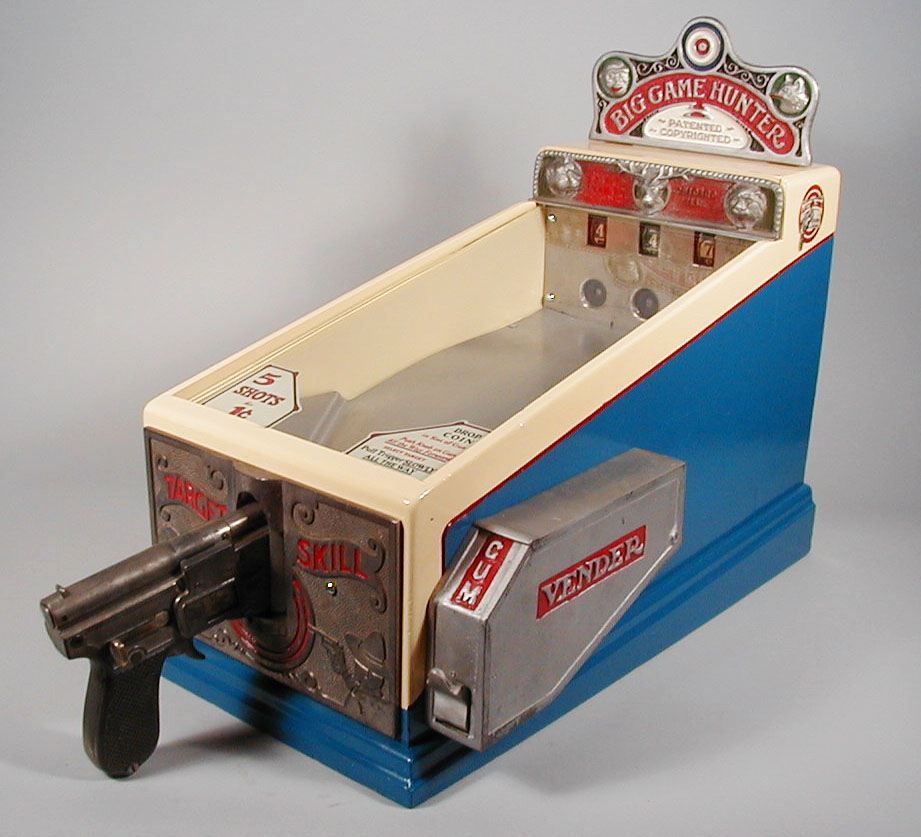
Big Game Hunter The next variation of the Big Game Hunter came by taking the oak case cabinet style, only made of poplar and painted to lower the cost and give it a new look. This happed around 1936. Some models also had a gumball vendor added to the side that gave a gumball with every play (if you chose to take it). This add-on was obtained from Charley Fey who was a great friend of Walt Tratsch (the T in A.B.T.) It was used as a way to get around the obvious look of the BGH as being a gambling machine. This model should sell for around $1,100 to 1,400, a bit more with the gumball vendor. Click on the photo to enlarge it. |
|
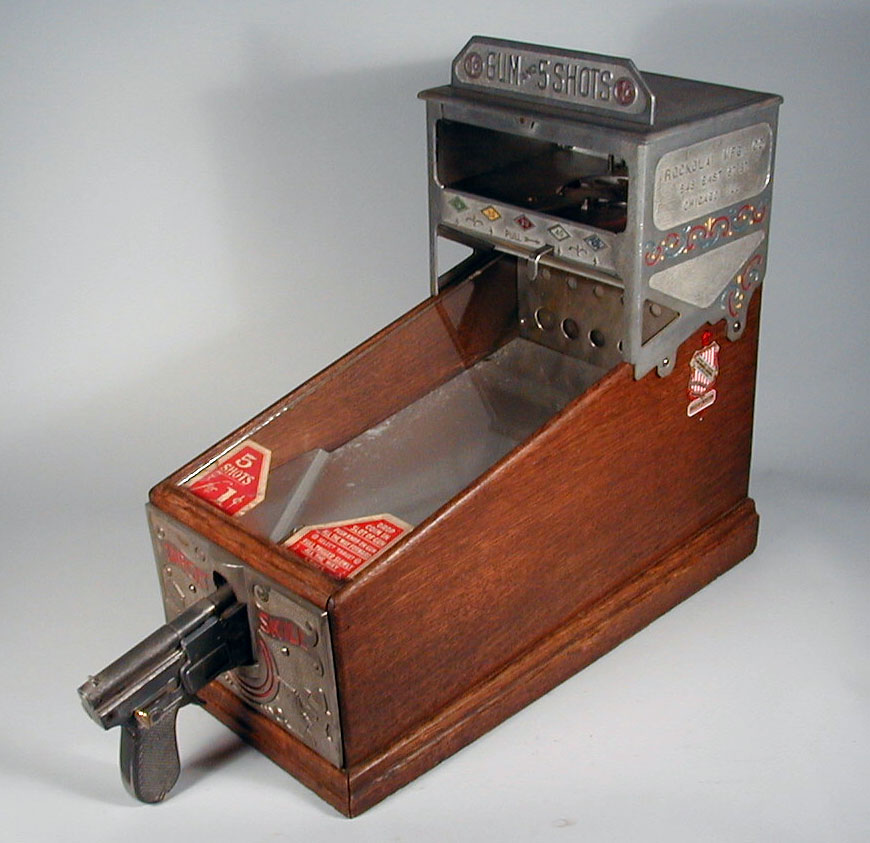
Rock-ola Model A Rock-ola also got into private labeling the A.B.T. Model A, and took it a step further by adding a gumball vendor to the top. This model is very difficult to find and is sought after by collectors of gun games, gumball machines and Rock-ola products. I have only seen two of this model in the nearly 50 years that I have been fooling around with A.B.T. In good condition this model should go for around $4,000 to 5,000. Click on the photo to enlarge it and also see other views of the game. |
|
Mexican Big Game Hunter A.B.T. also exported gun games to many countries around the world. This model was sent to Mexico. The gun had to be modified to fit the Mexican peso, which happens to be about the size of a quarter. The more colorful paint may have been factory or may have been added by an operator. Some extra bolts were added to the front plate to enhance security. The decal says "Insert a copper coin into the slot on the gun. Push the gun's knob and choose your target. Then slowly pull the trigger all the way back." I have only seen one of this type over the years. In good condition this model should go for around $1,200. Click on the photo to enlarge it and also see other views of the game. |
|
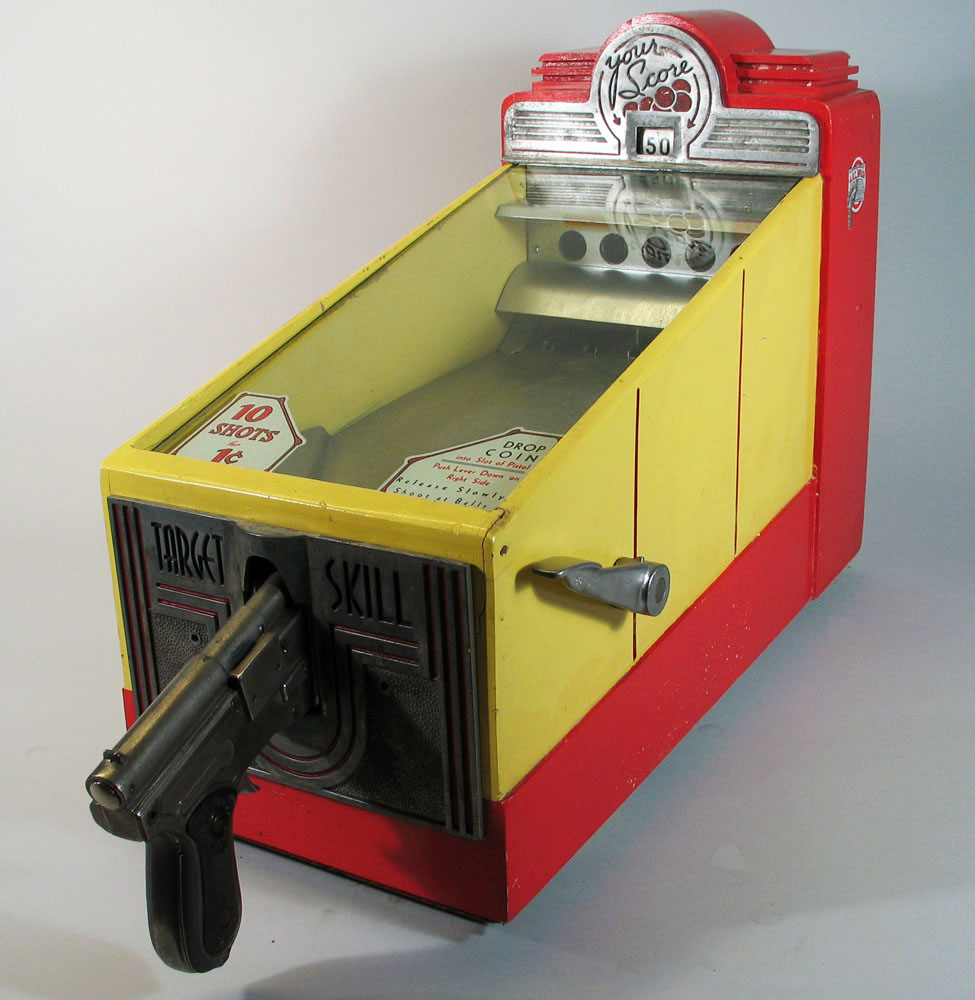
Target Skill (Model F) Companies were always changing models of coin-op games to keep the patrons dropping in their pennies, or nickels now too, and around 1937 the Target Skill or Model F was born. This was quite a departure from the earlier games as they added a clockwork motor to make steel balls rise into the shooting windows. Knocking the balls back advanced the score. The cabinet was redesigned to capture the art deco style of the time and a new art deco front was also produced. They also changed from a push knob on the gun to reset the game to a lever on the side of the machine. The Target Skill is the only model that they made with moving targets so it is a great version to have in any collection of A.B.T. games. I have seen three different color combinations over the years but the red and yellow is by far the most common. This model should sell for around $800 to 1,200, depending on the extent of the restoration. Click on the photo to enlarge it. |
|
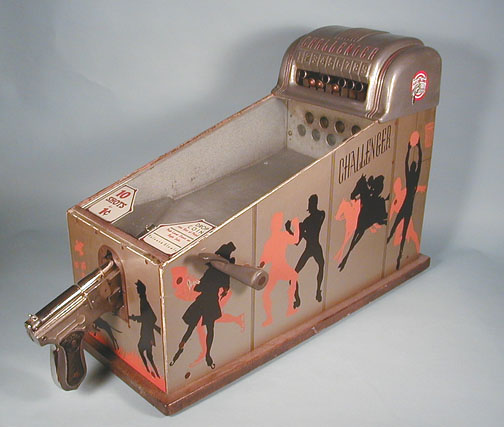
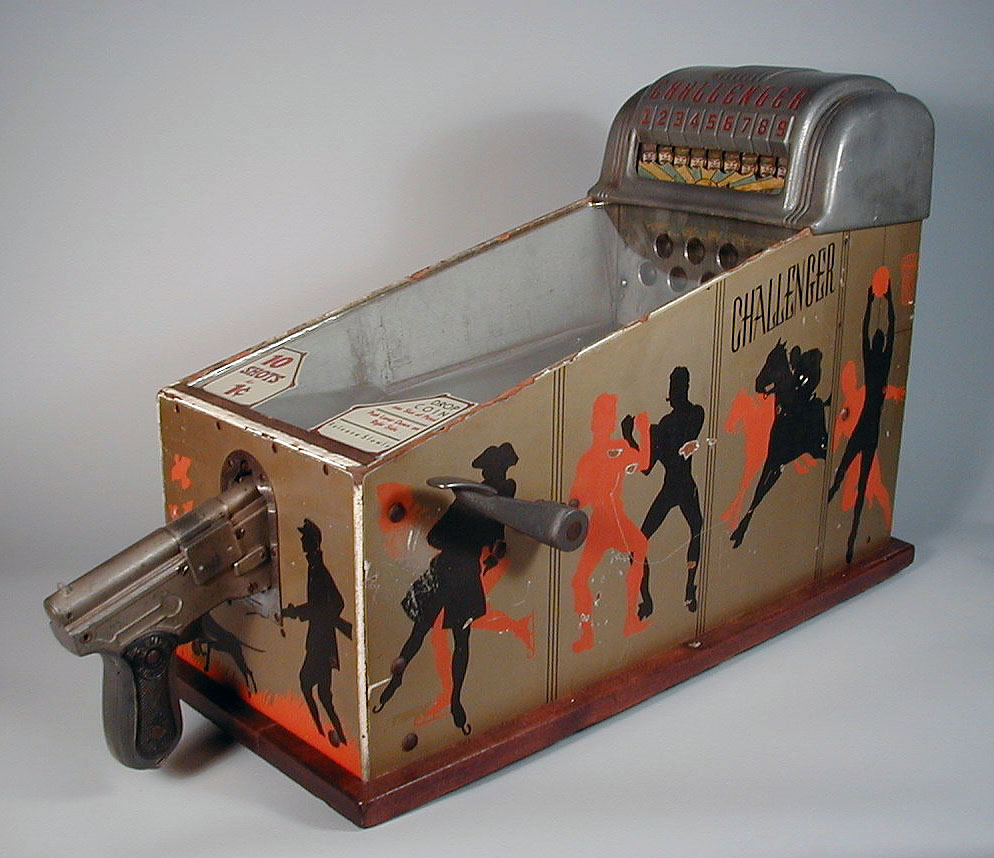
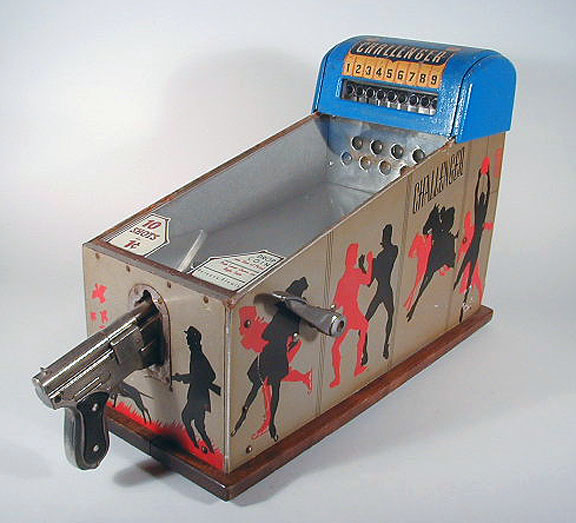
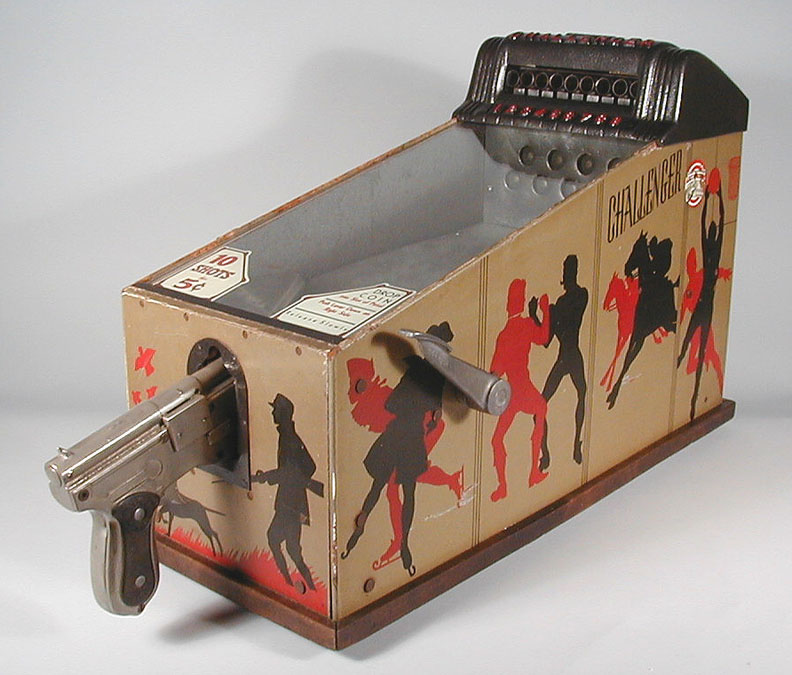
The Challenger In 1939 A.B.T. made a huge design change. They went to lithographed side and front panels. Eliminating the metal front plate and setting themselves up to be able to just change the graphics, scoring assembly and top head to create new games. The Challenger has 9 targets. Hitting the target causes the tube above it to drop with a brass (or copper) ball that rolled forward. Very simple design and it is the most common model that you will find. They were available in both penny and nickel denominations. Challengers sell for $600 to 800, basically because they are easy to find in good condition. Click on the photo to enlarge it. |
|
WWII Conversion Challenger Along came the war and with it all the factory capacity went to war production rather than game production. One thing that they could do was offer a kit to operators who could use the feelings about the enemy to separate coins from the pockets of customers. This was one of two different types of conversion kits that they made, Japanese soldiers as targets and the rising sun as a front decal. This is a difficult model to find but new conversion kit parts are available. In good condition this model should go for around $1,200. Click on the photo to enlarge it and also see other views of the game. |
|
Wood Head Challenger Another thing that the factory could do was to build games using parts that they had on hand. So, Challengers were built with a wooden head as aluminum was not available to cast heads from. This is the only example of this game that I have ever seen. Click on the photo to enlarge it and also see other views of the game. |
|
"Clamshell" Model F By the mid 40s they were back up to speed in production and thinking about new models. So why not revive the Model F in the new cabinet style? This is what they did, and the game had picked up the nickname "clamshell" over the years. Same game with a new look. This model usually sells for $800 to 1,000 because of the moving targets aspect. Click on the photo to enlarge it. |
|
Big Game Hunter Since that was so easy to do, they also brought back the Big Game Hunter game. Again, the same game with a new look. I don't think that they made too many of these because it is one of the hardest models to find. This model with nice graphics on the cabinet should be worth $1,200 to 1,500. Click on the photo to enlarge it. |
|
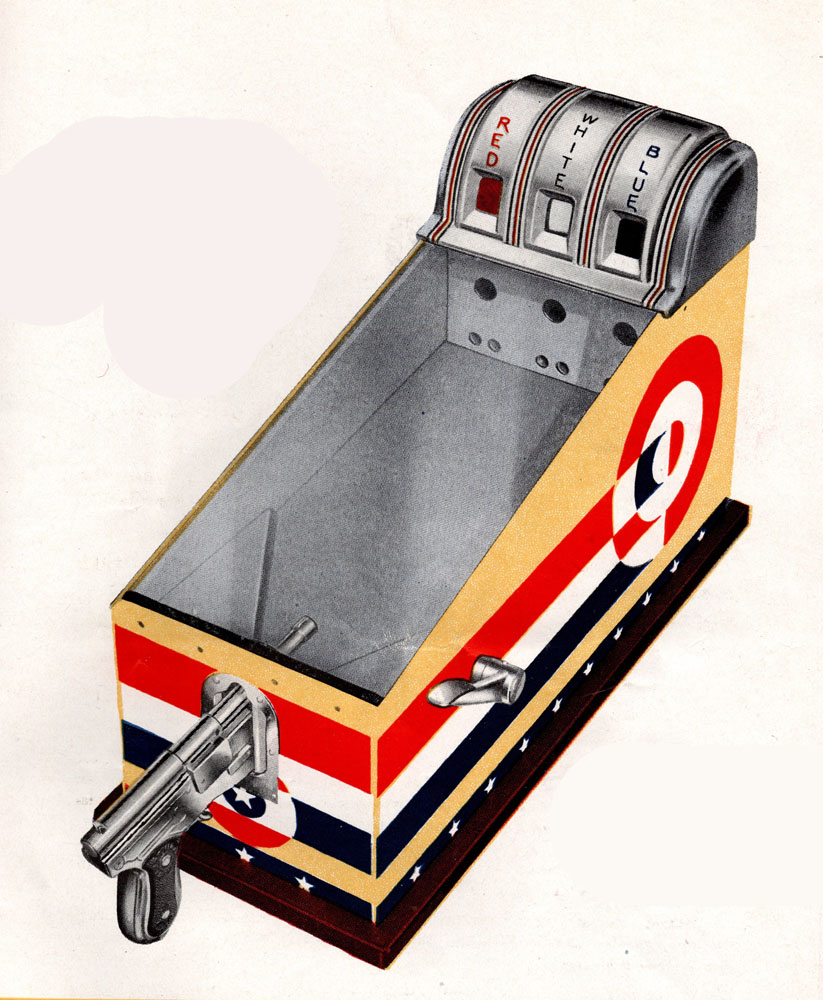
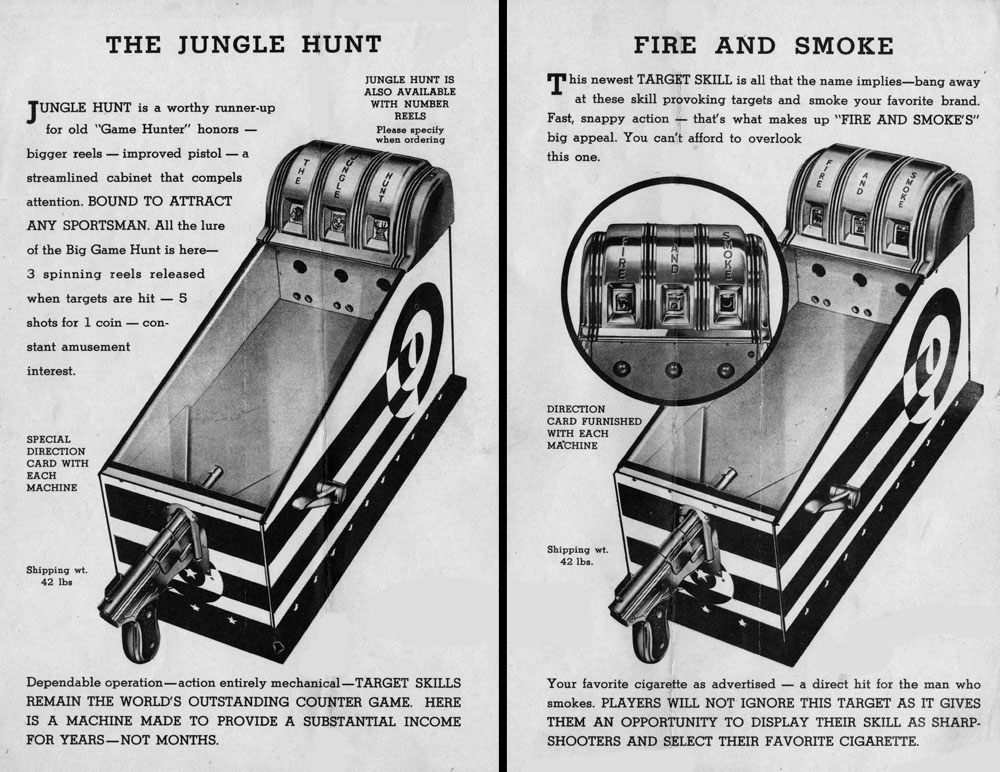
Red, White & Blue The next model to come out of the engineering department was again a new concept. Rather than having the reels spin when the targets were hit, this model used the clockwork motor to set the reels spinning when the game was reset, and hitting the target caused that reel to stop. Very much a gambling machine disguised as an arcade game. Matching up 3 of a color would win the shooter a prize and lining up red, white and blue was the royal flush. This game was also available with animals, called The Jungle Hunt, and cigarette packs called Fire And Smoke. To see a photo of a brochure for these models click here. All three of these models are among the hardest ones to find. I have never owned one but am looking! Fully restored games with good cabinet graphics should sell for around $1,500 to 1,800. Click on the photo to enlarge it. |
|
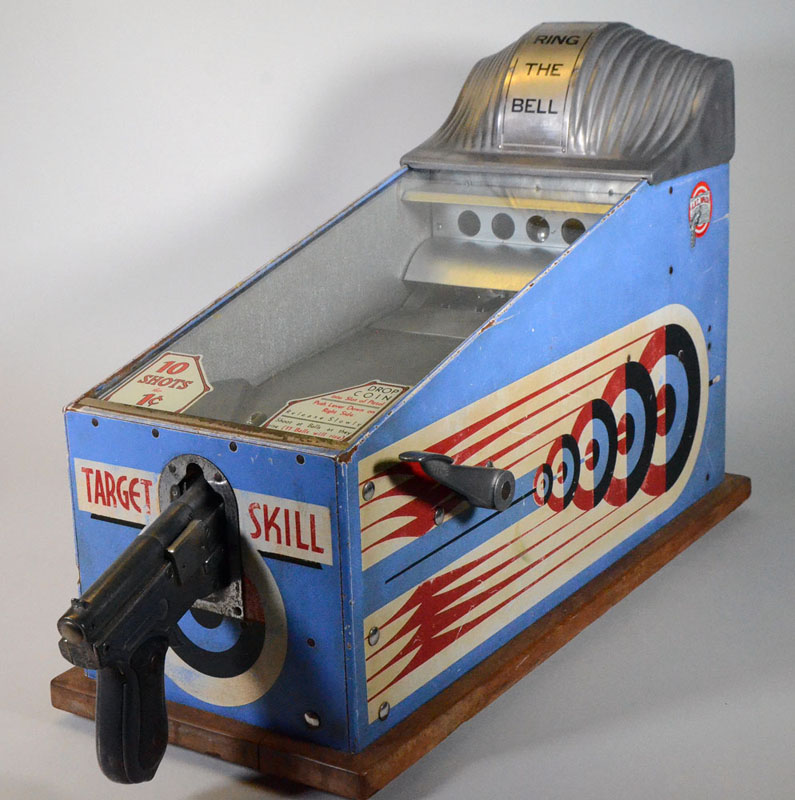
Ring The Bell Operators were always clamoring for more new games and ones with lights and buzzers were always a hit. So, they took the good old model F, covered the score window with a metal plate, added a switch, battery and door bell and viola, a new game was born. The original game had a large cylinder battery like the ones used in old telephones. This restoration required a new battery pack and switch, otherwise it was a nice original. This model should sell for $800 to 1,000. Click on the photo to enlarge it and also see other views of the game. |
|
The 1946 Challenger 1946 was a big year for the company with many new models and greatly ramped up production. They even updated the Challenger with a new style of cast aluminum head. I have taken to call this model the "airplane wing" top and the older model the "loaf of bread" top. At one point in production they were cranking out about 100 a day! I have seen heads in bare aluminum as well as painted in a variey of colors. This is the easist model to find and should sell for around $600 to 800. Click on the photo to enlarge it. |
|
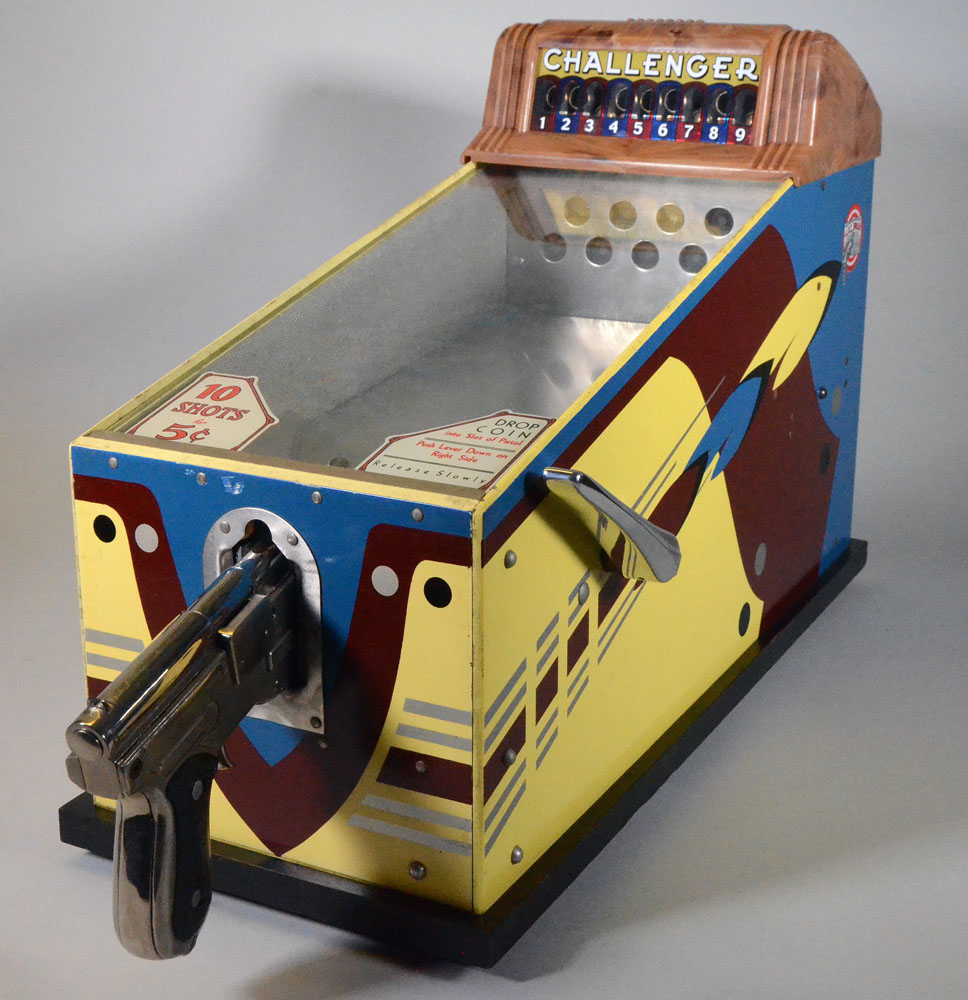
The 1948 Challenger In 1948, they made another change to the Challenger game. They designed a plastic head that would take a silk-screened glass insert with the game name and scoring information. This change allowed them to create new games by just designing new artwork. The cabinet graphics were updated to what I call the "Rocket Ship" design and the "deco" reset handle was changed to the "modern" style. This model should also sell for around $600 to 800. Click on the photo to enlarge it. |
To see more models click here.